Table of Contents
- Introduction
- Understanding Tier-1 SOC Architecture
- Designing the Physical SOC Room
- Staffing a 24/7 SOC in Malaysia
- Tier-1 Shift Handover Playbooks
- Creating a Smart 24/7 Shift Rota
- Tools, Tech & Local Compliance
- Metrics & Continuous Improvement
- Conclusion
Introduction
“In 2024 Malaysia recorded a 153 % jump in ransomware while scam calls surged 83 %. Threat actors don’t punch out at 5 p.m.—neither should your defences.” (See how these trends rank in our Top 10 Cybersecurity Threats to Watch in 2025 report.)
Malaysia’s MyDIGITAL blueprint is hurtling the nation toward a USD 25 billion digital economy by 2030. That growth arrives hand-in-hand with an expanded attack surface, stricter regulations (PDPA, RMiT) and a talent crunch that already leaves one in three cyber-sec posts unfilled. Against this backdrop, a 24/7 Tier-1 Security Operations Center (SOC) is no longer a “nice-to-have” but a strategic imperative. New to SOC careers? Start with The Ultimate Guide to SOC & SIEM Careers (2025).
This article walks you through the full blueprint—people, process, technology—needed to stand-up and sustain an always-on SOC that meets Malaysian regulatory demands and global best practice. Expect field-tested checklists, room-layout tips, rota patterns and KPI templates you can drop straight into your playbooks.
Understanding Tier-1 SOC Architecture
1. The Three Pillars
| Pillar | Core Deliverable | Common Pitfalls |
|---|---|---|
| People | 24/7 eyes-on-glass; first-level triage | Alert fatigue, burnout, high churn |
| Process | Repeatable escalation & recording | Tribal knowledge, stale SOPs |
| Technology | Toolchain for detect → respond | Siloed data, license sprawl |
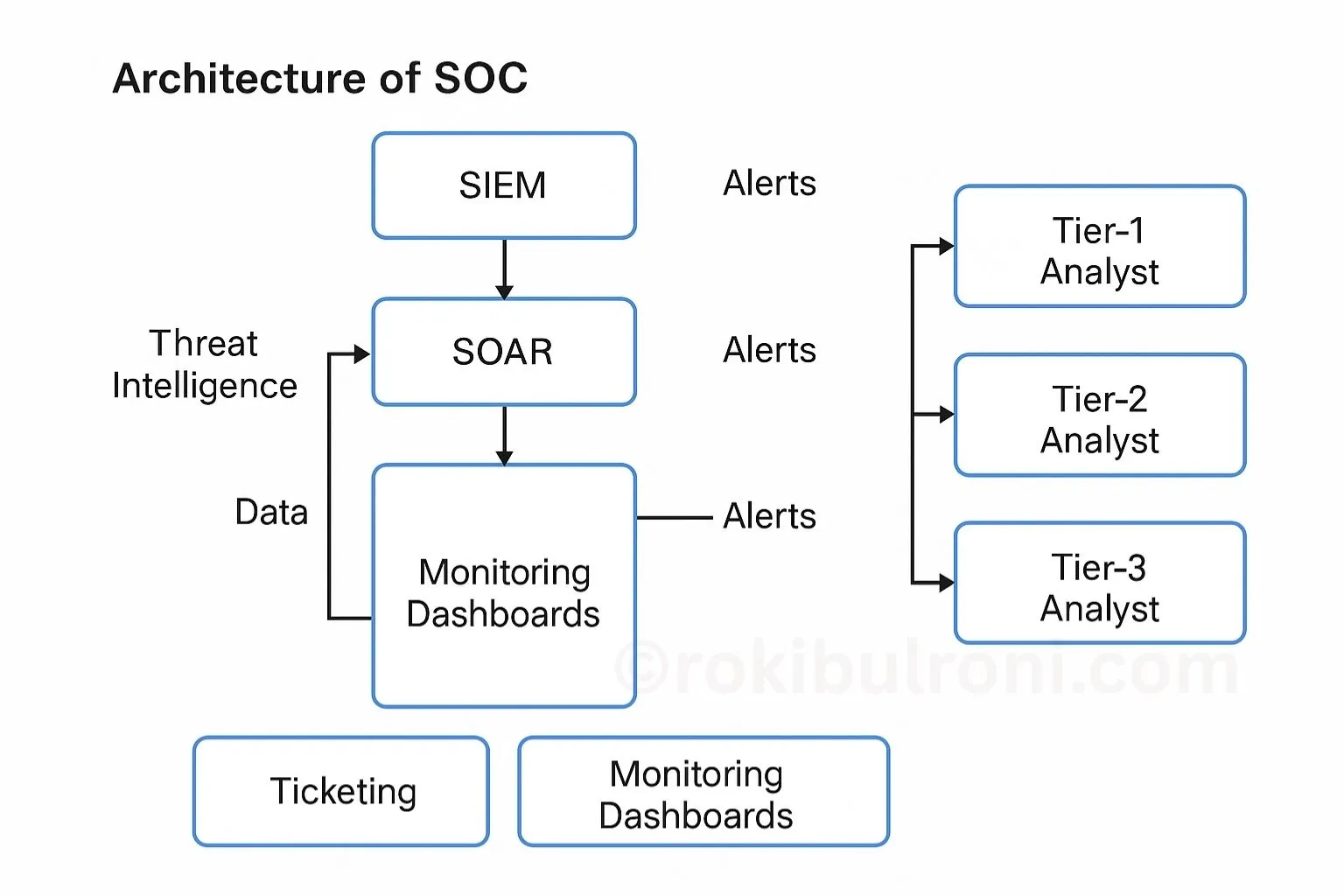
2. Logical Building Blocks
| Layer | Typical Tool | Tier-1 Analyst Focus |
|---|---|---|
| Collection | Log shippers, NetFlow taps | Validate data ingestion health |
| Correlation & Detection | SIEM (Sentinel, Splunk) | Investigate triggered rules |
| Automation | SOAR (Swimlane, XSOAR) | Verify auto-actions, close false-positives |
| Enrichment | TIP, UEBA, sandbox | Hunt for context, reduce noise |
| Case Mgmt | JIRA, TheHive | Document & escalate with evidence |
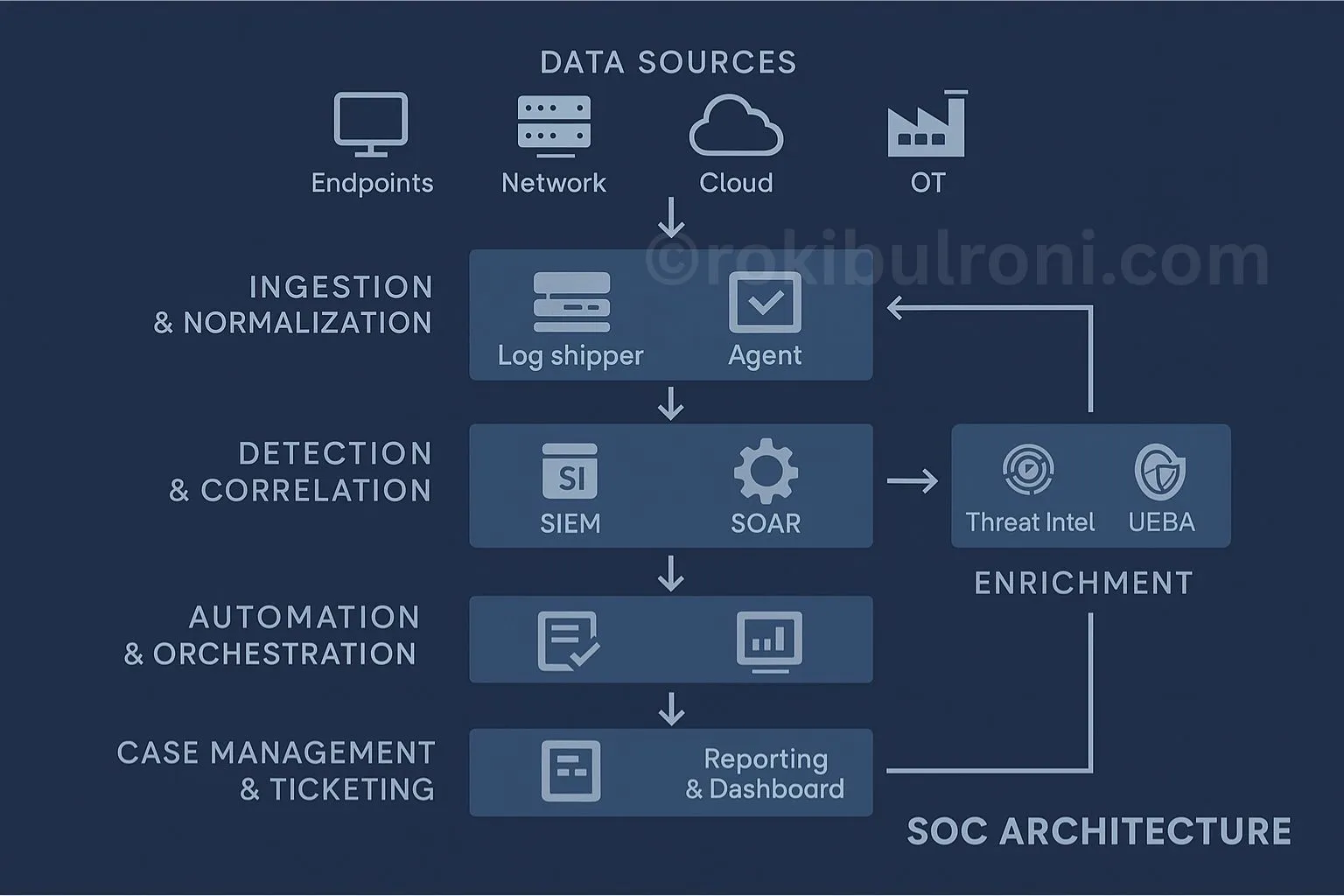
Pro tip: integrate SOAR playbooks directly with HR disable-account APIs and firewall ACLs; you’ll shave minutes off MTTR without additional head-count. (Need help choosing between SIEM & SOAR? Read our comparison: SIEM vs SOAR—Which One Do You Need?.)*
Designing the Physical SOC Room
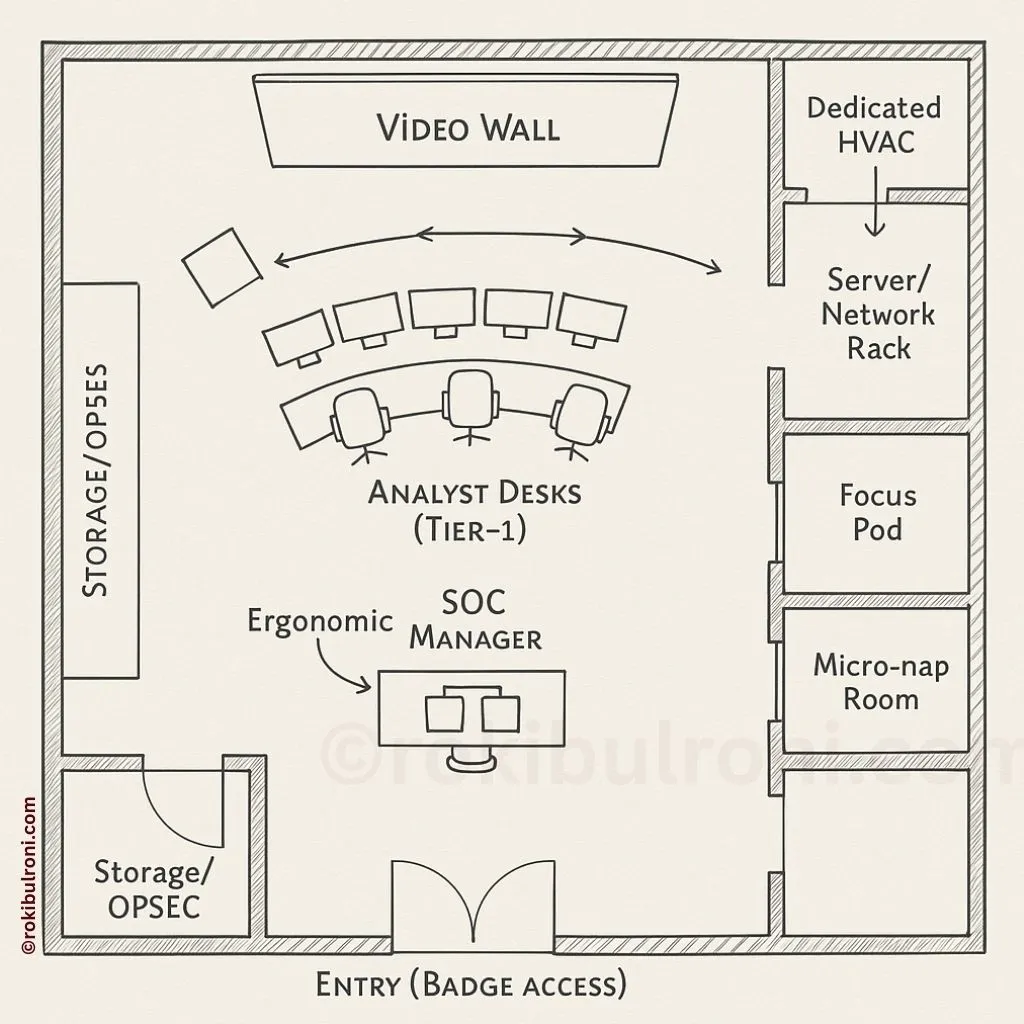
Why layouts win incidents
Ergonomic consoles, indirect lighting and acoustic dampening lower analyst cortisol levels by up to 18 % according to recent control-room studies. Lower stress = faster decisions.
Layout Essentials
- Location & OPSEC – Window-less, badge-controlled room that looks like a store-room from the corridor.
- Sight-Lines – Semi-circular desks facing a central video wall or clustered 43-inch monitors; no analyst should have to swivel more than 30° to view critical dashboards.
- Ergonomics – Electric sit/stand consoles, 120 Hz monitors, and blue-shift lighting for night shifts.
- Infrastructure – Dual power feeds and dedicated HVAC—server-grade GPUs generate surprising heat.
- Quiet Zones – A sound-proof focus pod for malware reverse-engineering and a micro-nap room to combat 03:00 burnout.
Staffing a 24/7 SOC in Malaysia
1. Role Pyramid
| Tier | Head-Count* | Core Task | Skills Snapshot |
|---|---|---|---|
| Tier 1 | 12 | Monitor, triage, escalate | TCP/IP, Windows/Linux, MITRE ATT&CK |
| Tier 2 | 6 | Incident response | Memory forensics, packet carving |
| Tier 3 / Engineering | 3 | Threat hunting, tool tuning | Sigma/YARA, Python, API scripting |
| SOC Manager | 1 | Strategy, metrics, HR liaison | ITIL, budget, coaching |
*Assumes 24/7 cover with 12-hour shifts and 25 % leave buffer.
2. Hiring Realities
- Talent gap: ~10 k unfilled cyber roles by 2026.
- Salary bands: Tier-1 analysts average RM 6–8 k/month; bigger banks pay 30 % premiums.
- Retention levers: certification bursaries, AI-driven triage to slash grunt work, and forward-rotating shift rotas (see Section 6). Looking for personal growth tips? Check our Cybersecurity Career Accelerator.
Tier-1 Shift Handover Playbooks
Nothing tanks containment time like a botched handover at 07:55. Standardise it.
Handover Checklist (excerpt)
| Category | Outgoing Must Document | Incoming Must Do |
|---|---|---|
| Critical Alerts | ID, severity, current status | Re-validate priority & next step |
| Open Incidents | Ticket #, last action, owner | Accept ownership in case tool |
| System Health | SIEM ingestion gaps, SOAR errors | Verify fix or escalate infra team |
| Workarounds | Temp firewall rules, user lockdowns | Schedule perm fix or review |
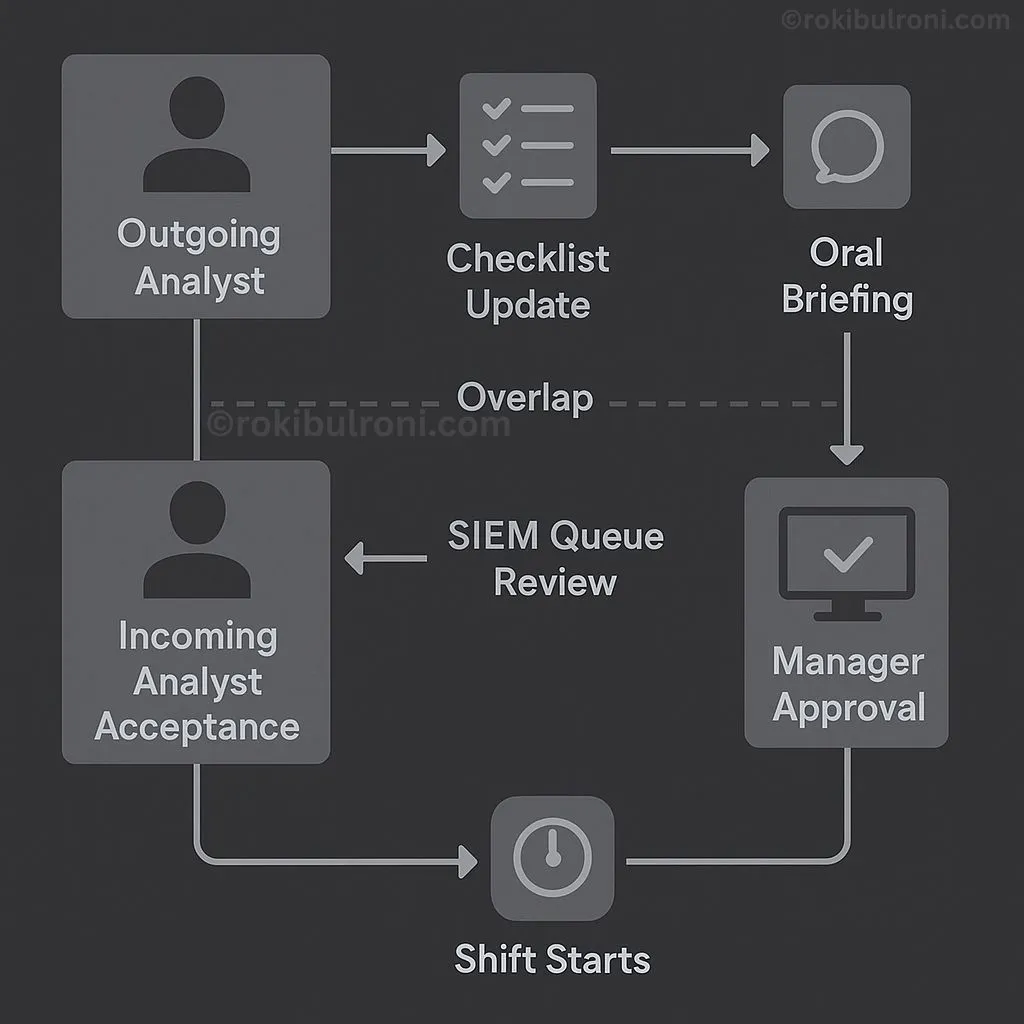
Best practice: schedule a 15-minute overlap; forbid analysts from clocking out until the incoming shift signs the digital checklist. (For deeper analyst-level SOPs, our field guide in Building a 24/7 Tier-1 SOC—Architecture & Shift Playbooks covers templates and lessons learned.)
Creating a Smart 24/7 Shift Rota
| Rota Pattern | Cycle (days) | Pros | Cons |
|---|---|---|---|
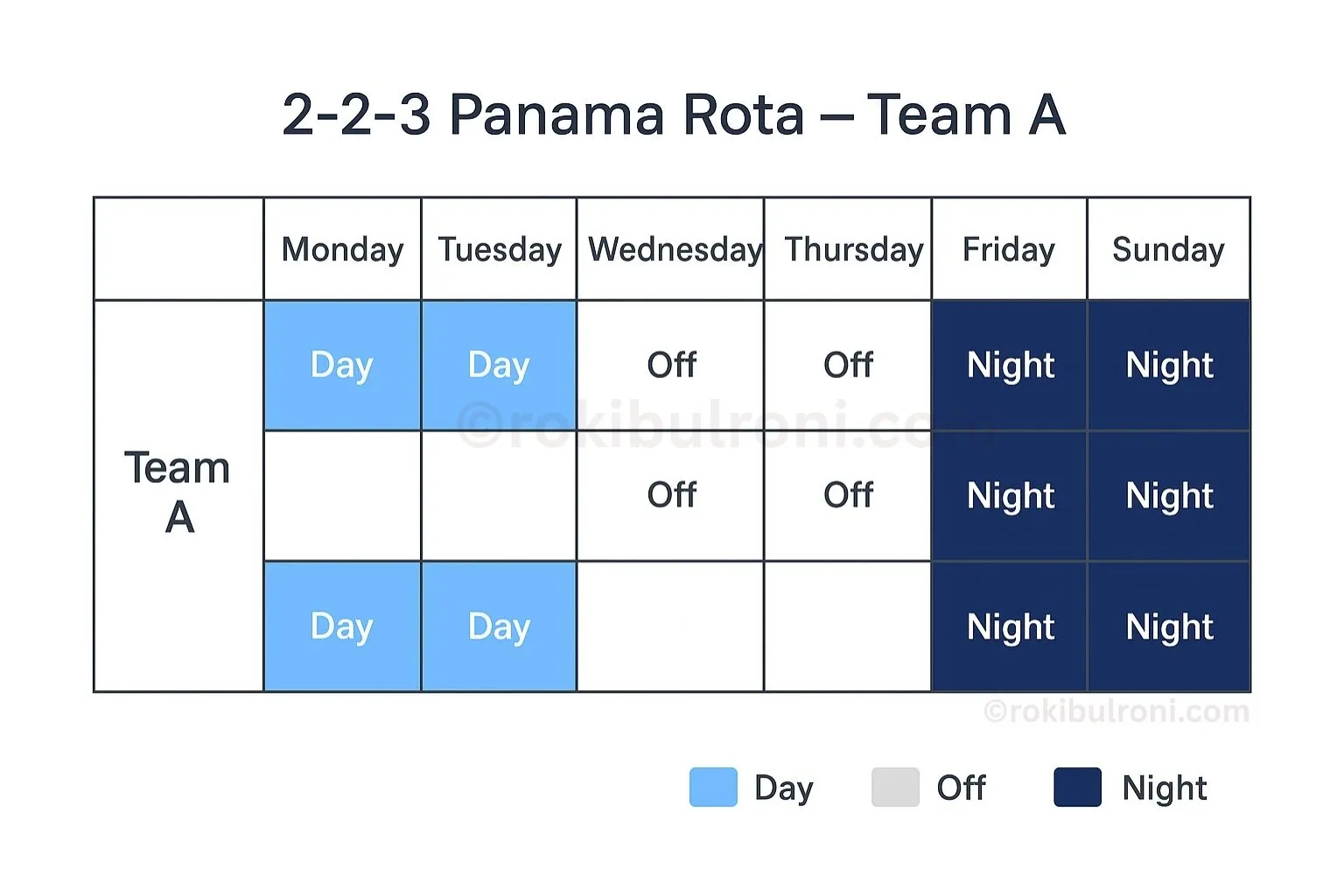
| Panama (2-2-3) | 28 | Equal weekends off, predictable | Two consecutive 12-hour nights |
| Dupont | 28 | Never >4 nights in a row | Complex swapping |
| 4-on/4-off | 8 | Long rest blocks | Irregular pay periods |
Example 2-2-3 (Team A) Mon Day ▶ Tue Day ▶ Wed Off ▶ Thu Off ▶ Fri Night ▶ Sat Night ▶ Sun Night.
Add an on-call shadow for surge events; pay a 20 % retainer and require VPN connectivity within 15 minutes.
Tools, Tech & Local Compliance
| Control Need | PDPA / RMiT Clause | Practical Tool Choice |
|---|---|---|
| Log retention 90 days on-shore | PDPA §9, RMiT 11.6 | Cloud-native SIEM with MY region storage |
| Continuous monitoring | RMiT Part C §10.22 | Managed EDR + 24/7 SOC |
| Breach notification ≤72 h | PDPA Amend. 2024 | SOAR playbook w/ auto-drafted report |
| Identity proofing | RMiT App 3 | MFA + UEBA risk scoring |
Short-listing tips
- Data residency – Ask vendors for Penang/KL datacenter options or private-cloud deploy.
- API-first – Future-proof integrations; your tier-3s will script against it.
- Native ML – Automated alert clustering cuts Tier-1 queue by ~40 %.
- Transparent licensing – Watch out for EPS (“events per second”) penalties as you onboard OT logs.
Metrics & Continuous Improvement
| KPI | Good | Danger Zone | Why It Matters |
|---|---|---|---|
| MTTD | < 60 min | > 4 h | Early detect = less blast radius |
| MTTR | < 4 h | > 1 day | Direct cost & reputation impact |
| False-Positive Rate | < 25 % (P1) | > 50 % | Drives analyst fatigue |
| Analyst Capacity Buffer | > 15 % | < 5 % | Slack for surge events |
| Playbook Update Cadence | Quarterly | Yearly | Keeps pace with TTPs |
Feedback Loops
- Post-Incident Review within 48 h—document root cause, gaps, lessons.
- Quarterly Table-top—red-team the handover checklist & rota under pressure.
- Analyst NPS Survey—if morale dips, so will detection fidelity.
Automate metric harvesting from SIEM/SOAR into a Grafana board visible to execs; what gets measured gets budgeted.
Conclusion
Standing up a Malaysian 24/7 Tier-1 SOC is equal parts engineering project and people programme. Architect with automation at the core, design a room that keeps humans sharp, recruit smart then keep them through fair rotas and continuous upskilling. Measure everything—MTTD to morale—and let the data drive iterative hardening.
Do this and you’ll deliver not just compliance with PDPA and RMiT, but a genuinely resilient, talent-friendly operation that protects Malaysia’s booming digital economy around the clock.